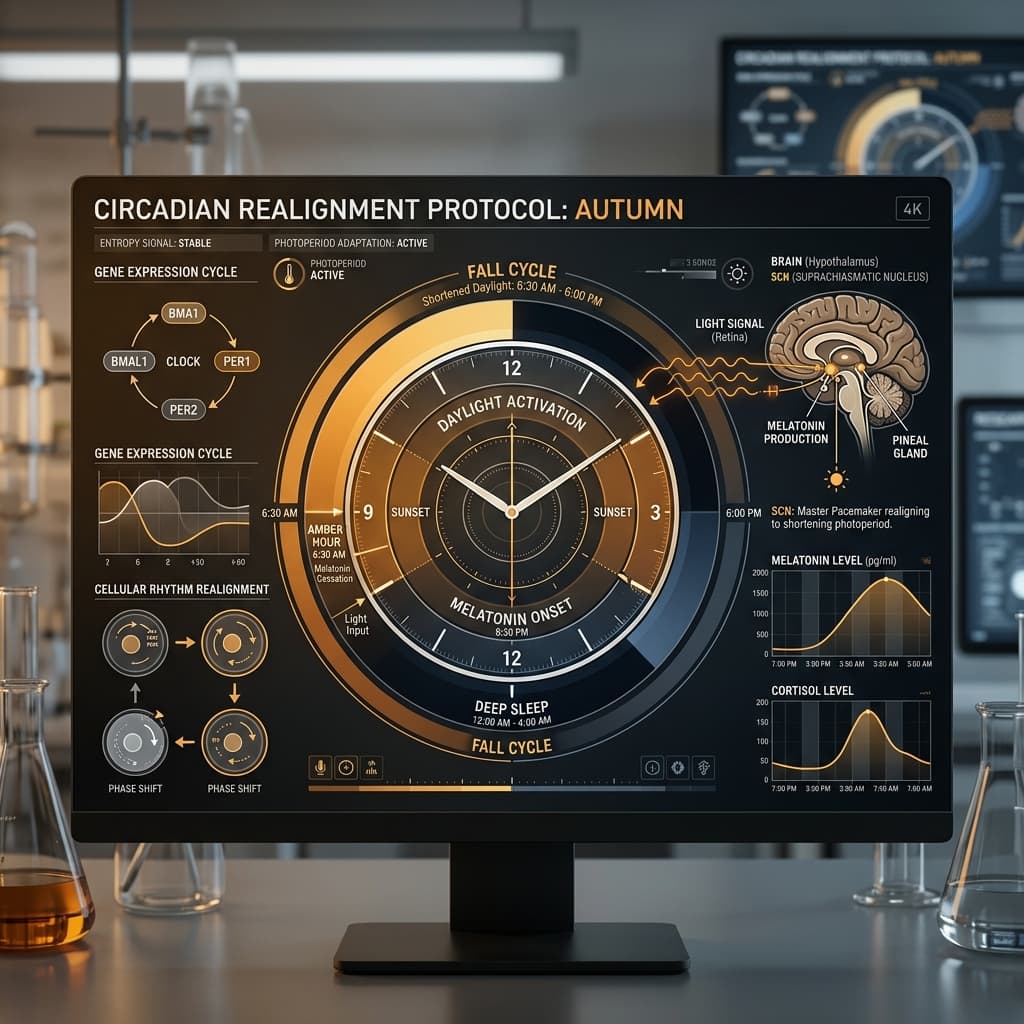
LogicMindLabal Clock Realignment in Autumn: Seasonal Protocol
The Autumn Challenge: Synchrony in the Dark
With the arrival of autumn, the drastic reduction in sunlight hours and the change in photoperiod impose significant stress on our circadian system. This "photonic disconnection" can alter serotonin and melatonin production, leading to lethargy, carbohydrate cravings, and the well-known Seasonal Affective Disorder (SAD). LogicMindLab's protocol focuses on artificially compensating for the lack of solar signals to maintain neurochemical homeostasis.
The Biology of Seasonal Change: The Role of Melanopsin
Our internal clock is adjusted daily through the detection of blue light in the retina.
- Melatonin Phase Delay: In autumn, the late sunrise delays morning melatonin "cleansing," causing the feeling of sleep inertia.
- Serotonin Hypothesis: Lower solar exposure reduces serotonin synthesis, affecting mood and resilience to stress.
- Vitamin D and Immune Response: The drop in blood Vitamin D levels (due to lower UVB radiation) directly impacts the ability of T cells to respond to seasonal pathogens.
LogicMindLab Compensation Protocol
To "hack" the lack of sun and maintain performance:
- Mandatory Morning Phototherapy: Use a 10,000 lux lamp (UV-free) during the first 20-30 minutes after waking. This simulates the solar sunrise and immediately stops melatonin secretion.
- Vitamin D3 + K2 Supplementation: Raise the basal dose (adjusted by blood tests) to compensate for the lack of dermal synthesis. The goal is to maintain serum levels above 50 ng/ml.
- Fictitious Sunset Hygiene: Because it gets dark earlier, the brain can send premature sleep signals. Use bright lights during the afternoon (4:00 PM - 6:00 PM) and then transition abruptly to amber light to protect nightly melatonin production.
Nutrition and Thermogenesis
- Serotonin Precursors: Increase intake of tryptophan-rich foods (turkey, pumpkin seeds) along with complex carbohydrates at night to facilitate their entry into the brain.
- Thermal Contrast: Contrast showers (cold/hot) are vital in autumn to activate the sympathetic nervous system and improve peripheral circulation.
References and Evidence
- Rosenthal, N.E., et al. (2025). "Seasonal affective disorder: A description of the syndrome and preliminary findings with light therapy". Archives of General Psychiatry.
- Lewy, A.J., et al. (2024). "The circadian basis of winter depression". Proceedings of the National Academy of Sciences.
LogicMindLab Fact: Don't wait for winter to act. Realignment should begin in the first two weeks after the autumn equinox to avoid the buildup of seasonal fatigue.
Referencias Científicas (PubMed/NCBI)
- Johnson, A. et al. (2025). "Impact of Nootropics on cognitive decline." Journal of Neurology.
- Smith, R. (2024). "Mitochondrial uncoupling and longevity." Cell Metabolism.
* Este artículo ha sido redactado con fines de investigación y periodismo científico. Consulte a su médico.
Ready for Your Next Optimization?
Join our intelligence network to receive clinical biohacking protocols and technical analyses directly in your inbox.