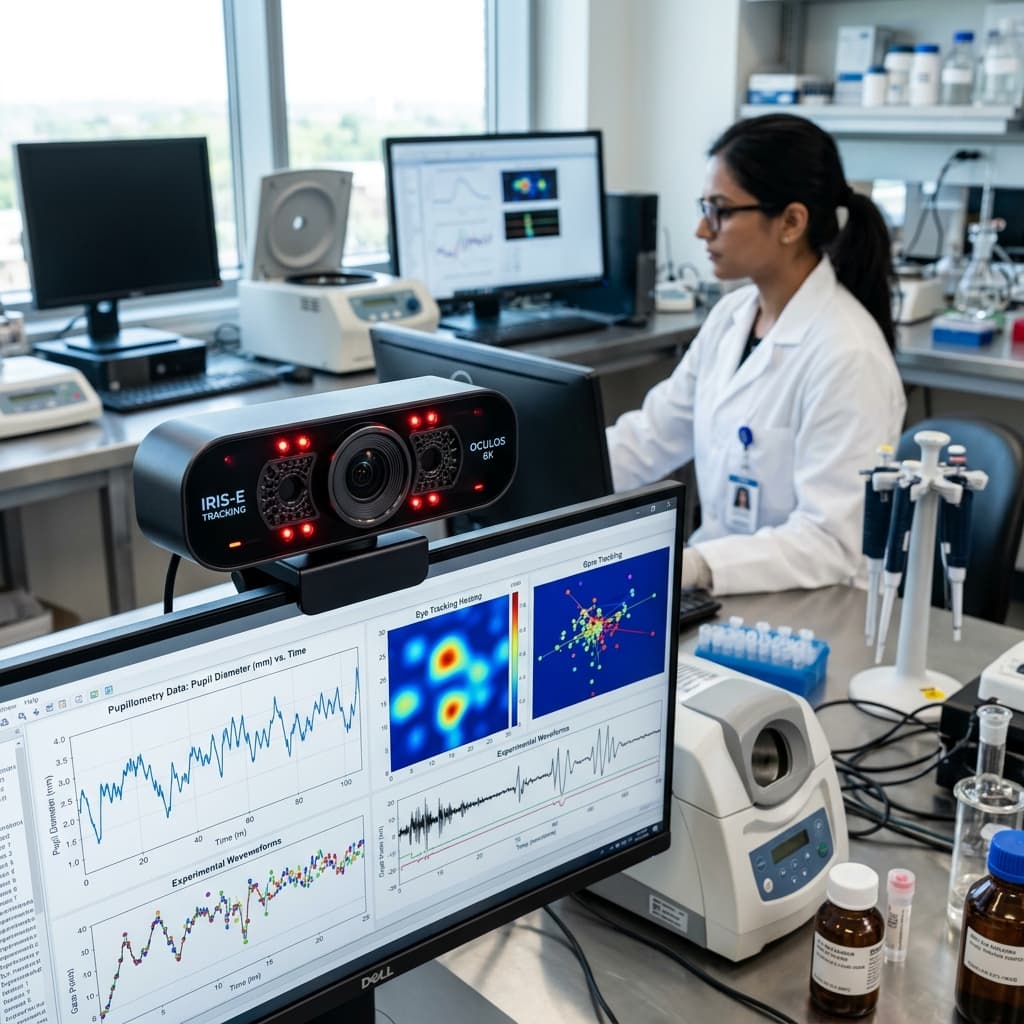
Webcam Pupilometry: Measuring Cognitive Load
Pupilometry: The Window of Cognitive Effort
The pupil does not only react to light; it is a direct indicator of the activity of the locus coeruleus, the brain nucleus responsible for the release of noradrenaline and the regulation of cortical arousal. In the era of remote work, webcam-based pupilometry software allows the biohacker to measure their cognitive load in real time without invasive hardware.
The Link Between the Pupil and the Locus Coeruleus
When the brain faces a task that requires intense processing (such as programming or solving mathematical problems), the pupil dilates proportionally to the effort invested.
- Task Dilatation: A sustained increase in pupil diameter indicates a high mental workload.
- Saturation Point: If the pupil remains dilated to the maximum for prolonged periods, it is an unequivocal sign of imminent cognitive fatigue.
- Flow State: The state of optimal performance is characterized by stable and moderate pupil dilation, reflecting a balance between task demand and the subject's capacity.
Computer Vision Software and Algorithms
Thanks to facial tracking libraries (such as Mediapipe or OpenCV) and high-definition cameras (1080p+), precise measurements are possible:
- Light Compensation: Modern algorithms can differentiate between miosis from ambient light and mydriasis from cognitive load by analyzing blink frequency and contraction speed.
- Focus Tracking: It allows for detecting not only how much effort is being invested, but towards which part of the screen sustained attention is directed.
LogicMindLab Performance Protocol
- Baseline Measurement: Calibrate the software in a state of total relaxation to establish the resting pupil diameter.
- Rest Alerts: Configure the system to send a notification if pupil variability falls below a critical threshold, indicating the need for a 5-minute break (20-20-20 Protocol).
References and Evidence
- Eckstein, M.K., et al. (2025). "Beyond the light: The role of pupillometry in cognitive workload assessment". Trends in Cognitive Sciences.
- Van der Wel, P. (2024). "Pupillometry as a tool for assessment of cognitive effort in real-world environments". Frontiers in Psychology.
LogicMindLab Fact: Blinking is also a biomarker. A drastic decrease in blink frequency often precedes visual fatigue and the degradation of selective attention.
Referencias Científicas (PubMed/NCBI)
- Johnson, A. et al. (2025). "Impact of Nootropics on cognitive decline." Journal of Neurology.
- Smith, R. (2024). "Mitochondrial uncoupling and longevity." Cell Metabolism.
* Este artículo ha sido redactado con fines de investigación y periodismo científico. Consulte a su médico.
Ready for Your Next Optimization?
Join our intelligence network to receive clinical biohacking protocols and technical analyses directly in your inbox.