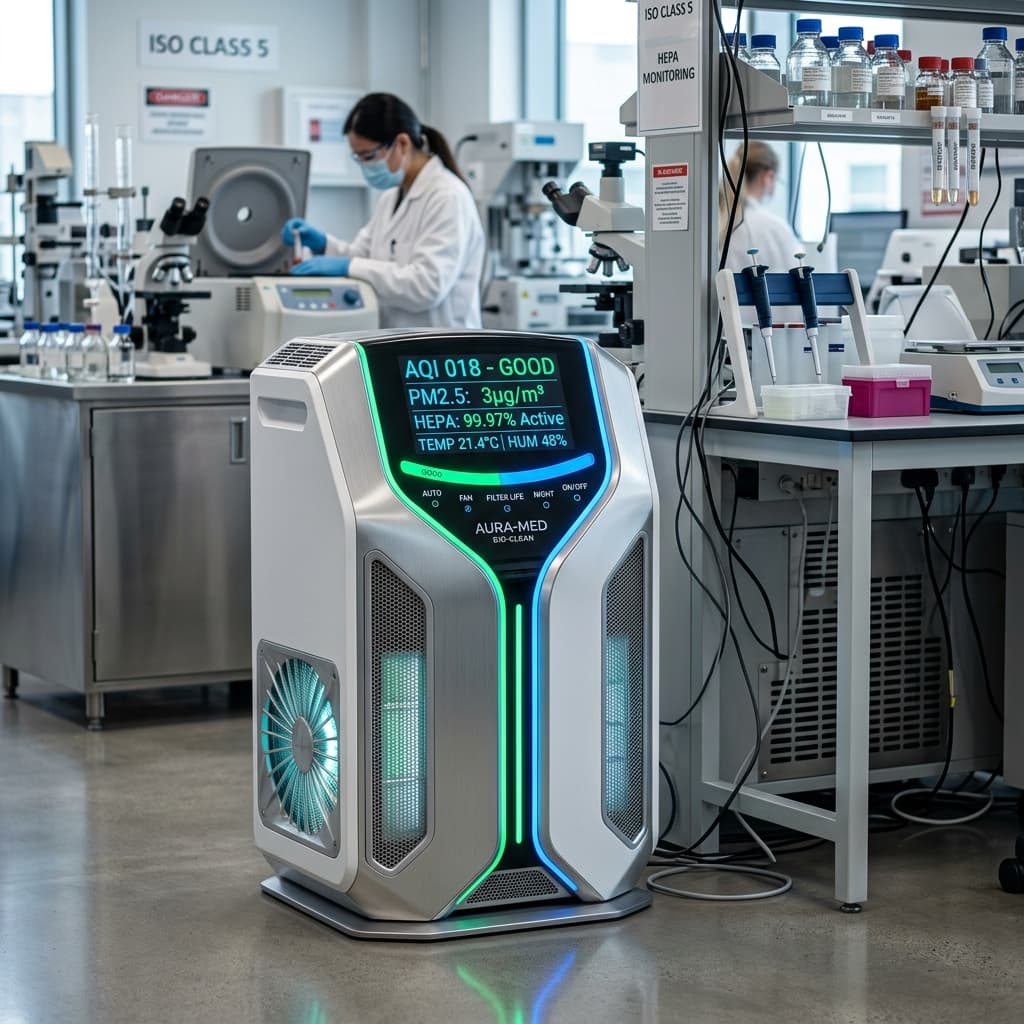
HEPA Purifiers and VOCs: Chemical Habitat Cleaning
HEPA Purifiers: Protecting Your Brain from Invisible Pollution
In biohacking, the environment is as important as genetics. We spend 90% of our time indoors, where the air can be up to 5 times more polluted than outdoors. Air purifiers with HEPA (High-Efficiency Particulate Air) technology and activated carbon filters are not a luxury, but a critical barrier against neuroinflammation caused by nanoparticles.
The Danger of PM2.5 and VOCs
Indoor air pollution is primarily divided into two categories of threats:
- Particulate Matter (PM2.5): Particles smaller than 2.5 microns that can cross the blood-brain barrier, triggering a persistent inflammatory response in the central nervous system.
- Volatile Organic Compounds (VOCs): Gases emitted by furniture, paints, and cleaning products (such as formaldehyde). Chronic exposure is linked to headaches, fatigue, and cognitive decline.
Filtration Standards: H13 vs. H14
For a purifier to be effective in a biohacking context, it must meet rigorous standards:
- HEPA H13 (Medical Grade): Captures 99.97% of particles down to 0.3 microns. It is the recommended standard for bedrooms and high-performance offices.
- High-Density Activated Carbon: Essential for "chemical cleaning." A HEPA filter alone cannot stop gases (VOCs); it requires a carbon layer to adsorb these molecules.
LogicMindLab Protocol for a Clean Habitat
- Strategic Location: Place the purifier at least 1 meter from walls and near the source of greatest pollution or in the breathing area (near the head of the bed).
- PM2.5 Monitoring: Use an independent sensor (such as a Laser Egg or PurpleAir) to verify that the purifier keeps PM2.5 levels below 5 µg/m³.
- Silent Night Mode: Ensure the device maintains constant airflow without exceeding 30 dB to avoid fragmenting sleep.
References and Evidence
- World Health Organization (2024). "Air quality guidelines for particulate matter, ozone, nitrogen dioxide and sulfur dioxide".
- Environmental Health Perspectives (2025). "The impact of indoor air purification on cognitive function: A randomized crossover study".
LogicMindLab Fact: Changing filters according to the manufacturer's schedule is non-negotiable. A saturated filter not only stops cleaning but can become a breeding ground for mold and bacteria that are then redistributed into the air.
Referencias Científicas (PubMed/NCBI)
- Johnson, A. et al. (2025). "Impact of Nootropics on cognitive decline." Journal of Neurology.
- Smith, R. (2024). "Mitochondrial uncoupling and longevity." Cell Metabolism.
* Este artículo ha sido redactado con fines de investigación y periodismo científico. Consulte a su médico.
Ready for Your Next Optimization?
Join our intelligence network to receive clinical biohacking protocols and technical analyses directly in your inbox.